Canada Student Visa Consultants You Can Count On
Canada has always been a strong choice for students from Ahmedabad. Great universities, post-study work rights, a clear path to PR, and a culture that genuinely welcomes international students.
But the study permit process has changed significantly over the last two years, and what worked before does not always work now. The SDS stream that once fast-tracked Indian applicants has been closed. A Provincial Attestation Letter is now mandatory before you even submit your application. And IRCC is scrutinising financial documents far more carefully than it used to.
Students who apply without guidance are running into refusals they didn’t expect, for reasons they don’t fully understand.
At Dynamic Education Consultants, we keep pace with these changes so you don’t have to. Our counsellors know what IRCC wants to see today, not what worked two years ago. From choosing the right institution to preparing your financial proof and drafting your SOP, we build your application around what actually gets approved.
What Makes Dynamic the Right Choice
Working with an education consultant is only useful if they genuinely know their subject. Here’s what we bring to your Canada application.
We know the current rules. Canada’s immigration policies shift frequently. We follow every update from IRCC so our students are always applying with the most current requirements in hand.
We help you secure the PAL. The Provincial Attestation Letter is now required before you can submit a study permit application. Most students don’t know which institutions provide it or how to get it. We handle that guidance.
We review your financial documents thoroughly. Canada’s study permit refusals are most often linked to weak or inconsistent financial evidence. We review your bank statements, loan letters, and GIC documentation before anything is submitted.
We prepare your SOP seriously. Your Statement of Purpose isn’t a formality. It’s the document that tells IRCC why you’re going, why you’ve chosen this institution, and why you’re coming back. We help you write one that’s honest and convincing.
We’ve helped students reach universities across Canada, including in Toronto, Vancouver, Calgary, Ottawa, and beyond.

Why Canada Continues to Be a Top Choice for Indian Students
There are good reasons why Canada receives more Indian students every year. Here are the ones that matter most:
Strong academic institutions. Universities like the University of Toronto, UBC, McGill, and McMaster consistently rank among the world’s best. But Canada also has an extensive network of colleges and polytechnic institutes that offer career-focused programs with excellent placement records.
Post-study work opportunities. The Post-Graduation Work Permit (PGWP) lets you stay and work in Canada for up to 3 years after completing a program that is 2 years or longer. This is one of the most generous post-study work policies of any English-speaking country.
A real pathway to permanent residency. Canada’s Express Entry system and Provincial Nominee Programs actively prioritise international graduates who have Canadian work experience. If staying long-term is part of your plan, Canada is probably the most transparent about how to get there.
Diverse and welcoming communities. Gujarati and broader Indian communities are well-established in cities like Toronto, Calgary, and Edmonton. For students leaving home for the first time, that familiarity makes a real difference in the early months.
Relatively affordable education. Compared to the US, tuition in Canada tends to be lower, especially at the graduate level. Combined with the work-during-studies allowance of 24 hours per week off-campus, it’s easier to manage costs while you study.
Canada Study Permit Eligibility Criteria
To apply for a Canadian study permit, you need to:
- Have a valid Letter of Acceptance (LOA) from a Designated Learning Institution (DLI)
- Hold a Provincial Attestation Letter (PAL) from the relevant province or territory
- Show sufficient funds to cover your tuition, living expenses, and return travel
- Have a valid passport covering your intended period of study
- Demonstrate that you plan to leave Canada when your study permit expires
- Be in good health (a medical exam may be required)
- Have no criminal record (a police clearance certificate may be requested)

Documents Required for a Canada Study Permit
Get these ready before you log into the IRCC portal:
- Valid passport
- Letter of Acceptance (LOA) from your DLI
- Provincial Attestation Letter (PAL)
- GIC (Guaranteed Investment Certificate) proof, if using GIC as financial evidence
- Tuition fee payment receipt (if first-year fees are already paid)
- Bank statements covering the last 4 to 6 months
- Education loan sanction letter (if applicable)
- Statement of Purpose (SOP) outlining why you want to study in Canada
- Academic transcripts and degree certificates
- IELTS or PTE score report
- Biometrics fee payment receipt
- Passport-size photographs as per IRCC specifications
Step-by-Step Canada Study Permit Process
Step 1: Receive your Letter of Acceptance (LOA) from your chosen DLI in Canada.
Step 2: Obtain your Provincial Attestation Letter (PAL) from the province where your institution is located.
Step 3: Open a GIC account with a designated Canadian financial institution if you’re using this method to prove financial capacity.
Step 4: Create your IRCC account and begin your study permit application online. Pay the study permit fee (CAD 150) and biometric fee (CAD 85).
Step 5: Complete and submit your application with all supporting documents, including your SOP, financial proof, and academic records.
Step 6: Provide your biometrics at a Visa Application Centre (VAC) in India.
Step 7: Wait for a decision. Processing times currently range from 7 to 12 weeks for most applicants.
Step 8: Receive your Port of Entry (POE) letter and arrange your travel to Canada.
Canada Study Permit Fees and Processing Time
| Fee Component | Amount (2026) | |
|---|---|---|
| UK Student Visa Application Fee | £558 (approx. Rs. 59,000) | |
| Immigration Health Surcharge (IHS) | £776 per year of the course | |
| Priority Processing (optional) | £500 to £1,000 extra | |
| TB Test (India) | Rs. 6,000 to Rs. 9,500 approx. | |
| VFS Service Charges | Rs. 4,000 to Rs. 7,000 approx. | |
Standard processing time: 7 to 12 weeks for most applications. PhD applicants may receive faster decisions under the dedicated processing stream.
Note: The SDS (Student Direct Stream) is no longer available for Indian students. All applicants now go through the regular study permit route.

Financial Requirements for a Canada Study Permit
IRCC requires you to prove you can support yourself through your studies in Canada. The current minimum living cost requirement is CAD 22,895 per year (updated in January 2025), in addition to your first-year tuition fees and return travel costs.
Common ways to prove financial capacity include personal or parental bank statements (4 to 6 months preferred), a GIC from an approved Canadian bank, an education loan sanction letter, or a combination of these.
Consistency matters enormously here. Your bank statements, loan documents, and GIC proof all need to align without unexplained gaps or sudden deposits. IRCC flags anything that looks like funds have been temporarily arranged just for the application.
Student Popular Courses
 MBA
MBA
 Health & Medicine
 Applied & Pure Science
 Engineering
 Business Management
 Computer Science and IT
Trending Universities among students
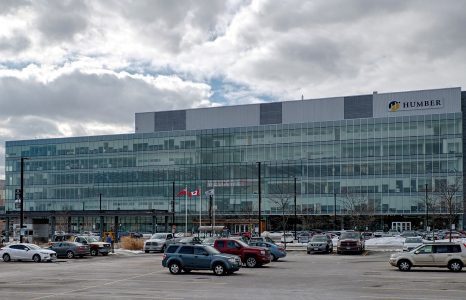
Humber College
- Is the Largest College in Canada, with three locations
- Ranks #1 in employment rate after six months of graduation
- Extensive network with 86,000 learners who live in more than 190 countries

Seneca College
- #1 Ranked amongst Ontario Colleges for Pathways
- Offers degrees and diplomas in over 300 areas of study
- Leads in Professional studies
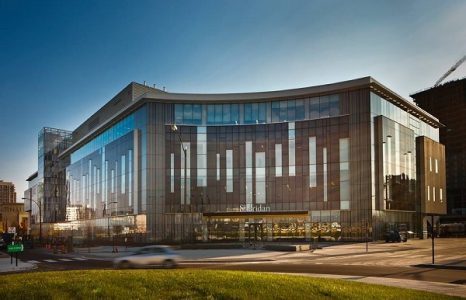
Sheridan College
- Ranks 1st in industry research income
- Offers hefty scholarships, awards, and bursaries worth millions each year
- Top Choice to study Advanced Manufacturing, skilled trades, community service, and healthcare courses
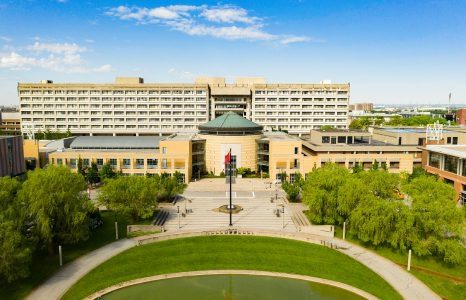
York University
- Top choice of University for Public Health students
- The Toronto Campus ranked #1 city for career women
- Offers several scholarships for International students
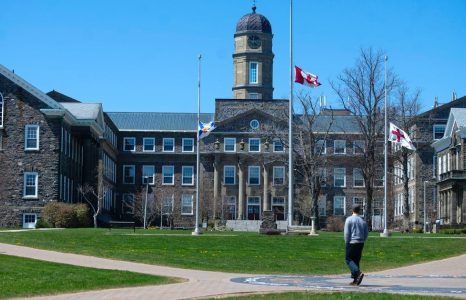
Dalhouse University
- It is one of the top ranked universities of Canada with 275th international ranking and 12th among countries.
- Catering to 6,000+ academic staff members, the university offers 4,000+ courses, 200+ degree programs, and 13 range of faculties.
- Annually, 21,000 student enrolments take place.
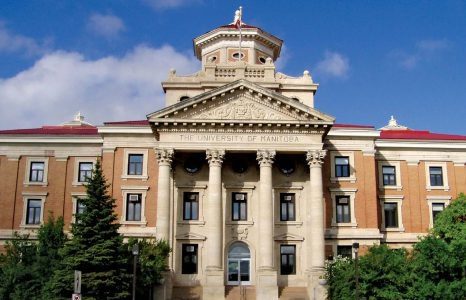
University of Manitoba
- Achieved a global ranking of #417 among the world’s top universities and 4th in Canada for dentistry and oral sciences
- Counted among the largest and most research-intensive universities.
- Opportunity to learn through flexible 100+ courses.
Best Cities to Live in the UK
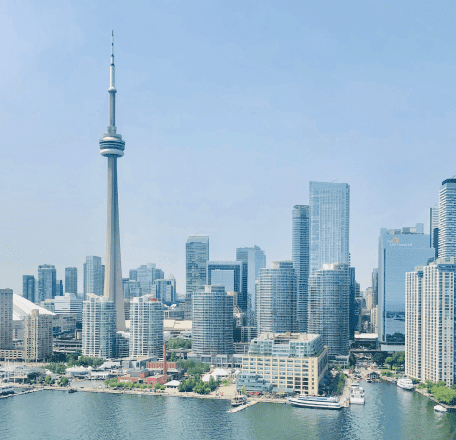
Toronto
- #1 Ranked city to study in Canada for a quality of life
- In the year 2019, a significant 76% of the job growth in Canada was attributed to the province of Ontario.
- Toronto proudly houses numerous Fortune 500 companies, contributing to its economic prominence and providing a hub for corporate excellence.
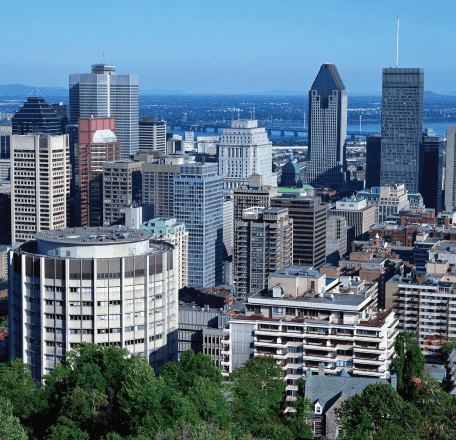
Montreal
- Montreal consistently secures a position within the top 20 best student cities globally, holding the 13th spot in 2024 according to QS Best Student Cities.
- As the second largest city in Canada, Montreal offers a dynamic and diverse urban experience.
- Students in Montreal benefit from low living costs, making it a budget-friendly destination for education.

Vancouver
- Vancouver provides complimentary transportation for international students, ensuring convenient city travel.
- In British Columbia, students access healthcare at just CAD 75 per month, promoting well-being on a budget.
- Vancouver, renowned for its city life, long coastline, and mild climate, stands out as an attractive destination for international students seeking a vibrant yet nature-infused experience.
Your pathway to the UK Dream

Personalized Guidance
Expert guidance to shape your career path

University Shortlist
List of colleges and institutes as per your desired course and profile

Admission letter & tuition fees
Skilled tutors to help you achieve desired scores

Visa Assurance
Fastrack your process & get ready to fly
The Latest in Study Abroad

FAQs About Canada Student Visa
A PAL is a letter from a Canadian province or territory confirming that there is room for you within that province’s international student intake limits. It became mandatory for most students in early 2024. Without a PAL, your study permit application will not be processed. Your DLI usually facilitates this process, but timing and availability vary by province.
No. The Student Direct Stream was closed for Indian applicants in late 2024. Indian students must now apply through the regular study permit route. While processing is slower, the documents and requirements are largely the same. Working with a consultant to ensure your application is complete and consistent significantly improves your chances.
At minimum, you need to show CAD 22,895 for living costs plus your full first-year tuition. For most graduate programs in cities like Toronto or Vancouver, budget for CAD 45,000 to CAD 65,000 total for the first year. IRCC looks for stable, documented funds, not just a one-time large balance.
Currently, spouses of international students can apply for an open work permit only if the student is enrolled in a Master’s, PhD, or certain professional degree programs at a designated institution. Spouses of undergraduate or diploma students no longer automatically qualify. Check IRCC’s current policy when planning dependent applications.
The PGWP allows you to stay and work in Canada full-time after graduating. The permit length matches your program length, up to a maximum of 3 years. You must graduate from an eligible DLI, apply within 180 days of receiving your final marks, and have a valid study permit when you graduate. It’s one of the biggest reasons students choose Canada over other countries.
Canada is one of the most practical paths abroad for Indian students, but only when the application is done right.
Dynamic Education Consultants in Ahmedabad helps you put together a study permit application that covers every requirement, answers every concern IRCC might have, and gives you the best possible chance of approval.
